Southern Glazer’s Wine & Spirits
MySG
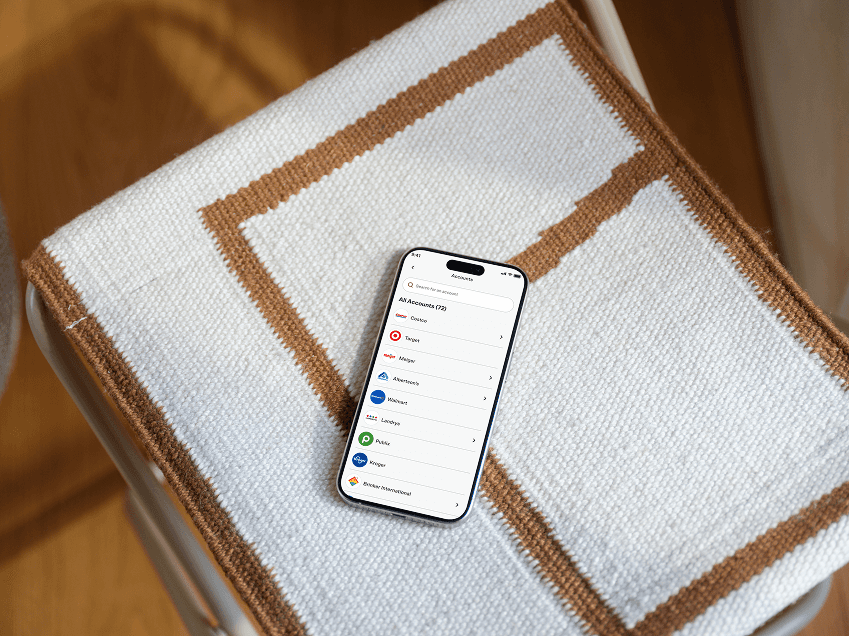
Southern Glazer’s 30,000+ employees had no simple way to find nearby SGWS accounts or see which wines and spirits the company supplied at each location. MySG brought both answers together in a native app designed for the moments they were needed.
Role
Lead Designer, Led end-to-end experience design within the cross-functional native app team.
Scope
Product strategy, research, design system, visual design, app identity, launch, and handoff.
Timeline
One year from discovery through phased launch.
Outcome
Shipped early, and established a product workflow that was reused across the next native apps.

01
Overview
Southern Glazer’s distributes wine and spirits to restaurants, bars, liquor stores, and major retailers nationwide. But its employees had no single place to see which nearby locations were SGWS accounts or which products the company supplied there. Sales representatives, leaders, and employees hosting off-site meetings often pieced together answers from spreadsheets, disconnected internal systems, and coworkers’ knowledge.
MySG turned that fragmented information into a native mobile experience, allowing employees to find nearby accounts and see the exact products SGWS distributed at each one. It also served as a lower-risk test case for native development. At the time, even Proof, the company’s ordering platform processing hundreds of millions of dollars, operated through a web wrapper. As lead designer, I helped define the product and establish the design system, workflow, and documentation reused across future apps.
02
Problem
The answers existed, just not in one place
Across Southern Glazer’s workforce of more than 30,000 employees, there was no simple way to see which nearby restaurants, bars, liquor stores, and major retailers were SGWS accounts or which products the company distributed at each location. Employees often relied on spreadsheets, disconnected internal systems, or coworkers’ knowledge to plan customer visits, host meetings at partner accounts, and know which products to order once they arrived.
WHY MYSG WAS NEEDED
WHO NEEDED THE INFORMATION
Leadership
Needed a clear view of account coverage when planning visits and meetings in unfamiliar markets.
Sales representatives
Needed current account, product, and sales information before and during customer visits.
Employees hosting meetings
Needed to find SGWS accounts and know what to order when Off-site meeting hosts
WHERE THE ANSWERS LIVED
Across one or more sources
Spreadsheets
Static account and sales exports that could be outdated by the time of a visit.
Multiple internal systems
Account, product, coverage, and order data split across separate tools.
Employee knowledge
Helpful context, if you knew the right person to ask.
WHAT REMAINED UNCLEAR
At the account
Still piecing together the full picture.
QUESTIONS THAT REMAINED
?
Is this location an SGWS account?
?
Which products are distributed by SGWS?
?
What has this account ordered recently?
?
Which products are out of stock?
03
EARLY VALIDATION
Turning research into a testable experience
Earlier stakeholder research and employee interviews gave us a clear starting point: employees needed a faster way to find nearby SGWS accounts and understand which products were available at each location. I translated those findings into low-fidelity wireframes covering discovery, map-based search, account details, and product browsing. Testing these early flows helped us validate the core journey and determine which information needed to be most prominent before moving into visual design.

04
user testing
The simplest path proved the most effective
We tested multiple high-fidelity concepts to understand how employees wanted to navigate products available at an account. Our team initially expected users to prefer a familiar food-ordering model, with sections for top-selling products, recently viewed items, and horizontally scrolling categories.
Testing challenged that assumption. Participants preferred the simpler category dropdown because it felt faster, more direct, and more like scanning a menu. Instead of encouraging users to browse, the dropdown helped them quickly narrow the product list and find what they needed. Based on that feedback, we made category selection the primary way to navigate products within an account.
Our Assumption
A familiar browsing focused experience


What Users Preferred
A simple menu-like dropdown


05
The Launch
Designed, tested, and launched
After rounds of prototyping, usability testing, and refinement, MySG launched as one of SGWS’s first native mobile apps. The release gave employees a faster way to find nearby SGWS accounts and understand which products were available at each location, while establishing a foundation for future native products across the company.

06
Design foundation

Built for MySG. Designed to scale beyond it
MySG became a testing ground for more than a single product. As we designed the app, we established core foundations for typography, color, spacing, accessibility, and reusable components, validating each decision within a real production experience.
This work helped start SGWS’s new company-wide design system. The patterns, documentation, and processes developed through MySG gave other teams a shared foundation for building more consistent native and web experiences.
07
Tone of Voice
A work app with an after-hours personality
Employees weren’t only opening MySG during the workday. Many explored it after hours, looking up favorite restaurants and bars at home or while traveling to see which were SGWS partners and what the company supplied there.
That behavior shaped a voice that felt light, curious, and distinctly human. Playful headlines, industry-aware humor, and custom illustrations brought personality to empty states and location messages, making the experience feel inviting without sacrificing clarity.

08
EVOLUTION & IMPACT
The app evolved. Its influence went further.
Following launch, we continued expanding MySG around how employees were using it. Users could favorite products and accounts, organize locations into lists, and explore richer business profiles with additional photography. Quick access to directions, phone numbers, and websites made it easier to move from discovery to a real visit or conversation.
After MySG fulfilled its original goals, the product team transitioned to new initiatives while the app continued operating with minimal ongoing product support. Its native patterns, design foundations, and documented ways of working also became a framework for future native applications across SGWS.